
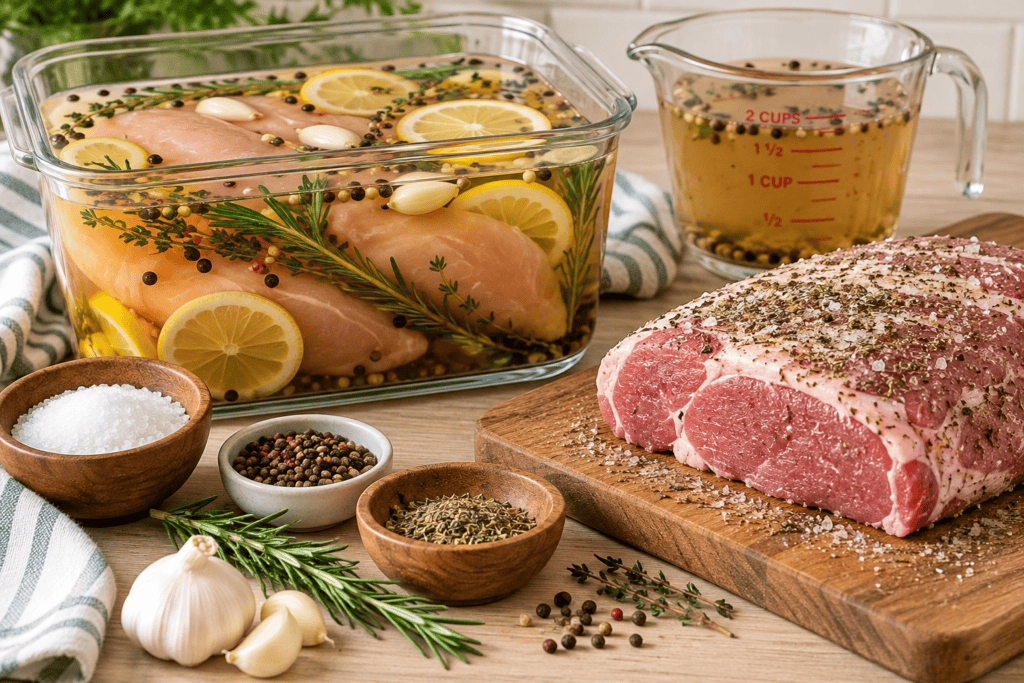
Want to know how to keep meat tender? My number one piece of cooking advice is to brine your meat. Especially chicken.
A simple saltwater brine can make a huge difference in flavor and tenderness. It doesn’t have to be complicated, either.
My second piece of advice? If you don’t brine it, see if you can velvet it.
Both techniques help keep meat tender and juicy, but they work differently. My general rule of thumb is simple: brine larger pieces, velvet smaller pieces.
How to Keep Meat Tender with Brining
Brining is one of the easiest ways to help chicken and pork stay juicy during cooking. A basic saltwater brine seasons the meat and helps it retain moisture.
Simple Chicken or Pork Brine
You don’t need anything fancy to make a basic brine. Just water and salt.
Ingredients
- 4 cups cold water
- ¼ cup (4 tablespoons) table salt
Instructions
- Stir the salt into the water until completely dissolved.
- Add the chicken or pork, making sure the meat is submerged.
- Cover and refrigerate for the recommended time.
- Remove the meat, discard the brine, and pat the meat dry before cooking.
How Long Should You Brine Meat?
This is a relatively strong brine, so smaller cuts don’t need to soak for hours.
| Cut of Meat | Suggested Brining Time |
|---|---|
| Chicken tenders or thin cutlets | 15–30 minutes |
| Boneless chicken breasts | 30–60 minutes |
| Bone-in chicken pieces | 1–2 hours |
| Pork chops | 30–60 minutes |
| Larger pork roasts | 2–4 hours |
These are general starting guidelines. Thickness matters, and leaving meat in a strong brine too long can make it overly salty.
Always brine in the refrigerator and cook meat to a safe internal temperature.
How to Keep Meat Tender with Velveting
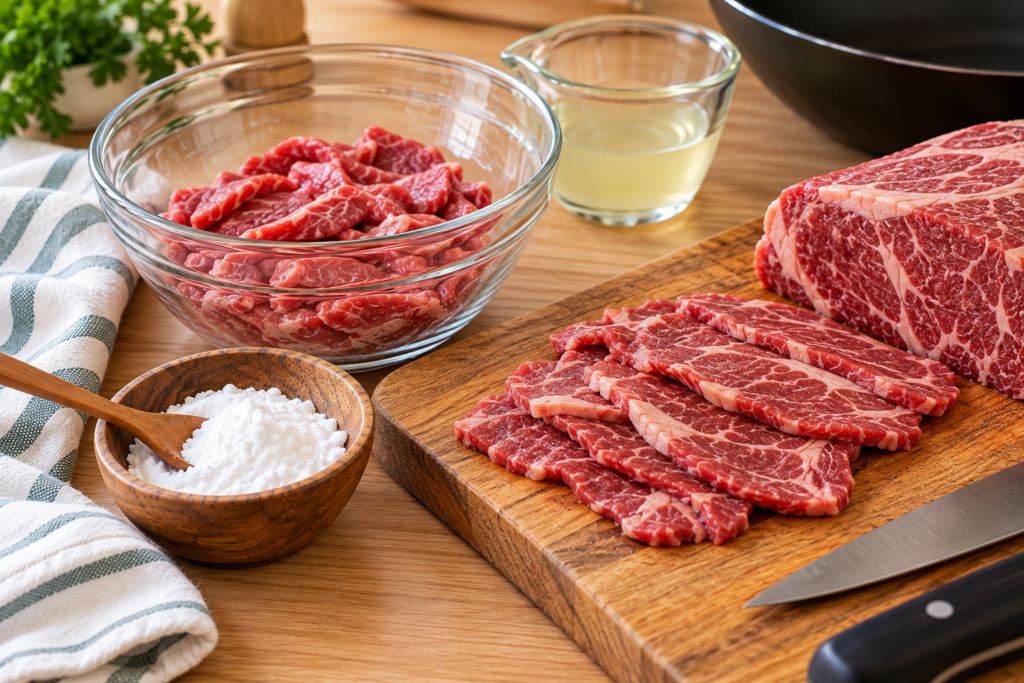
Velveting is one of my favorite tricks for keeping thinly sliced meat tender, especially in stir-fries.
Instead of soaking the meat in saltwater, this method uses a small amount of baking soda to raise the surface pH and help prevent the proteins from tightening too much during cooking.
I especially like this technique for quick stir-fries, where thin slices of meat can easily become tough or chewy. It’s a simple extra step that helps the meat stay tender during high-heat cooking.
Simple Baking Soda Velveting Method
Ingredients
- 1 pound thinly sliced chicken, beef, or pork
- ½–1 teaspoon baking soda (start with ½ teaspoon)
- A few drops of water, if needed
Instructions
- Slice the meat thinly, preferably against the grain.
- Sprinkle with baking soda and toss until evenly coated. Add a few drops of water if needed to distribute it.
- Refrigerate for 15–20 minutes. Avoid exceeding 30 minutes, especially with very thin slices.
- Rinse thoroughly under cold running water, then pat dry.
- Season or marinate as desired, then cook thoroughly.
The baking soda method is inexpensive, easy to use, and doesn’t require any specialty ingredients. It’s a simple trick that can make a noticeable difference in the tenderness of your stir-fries.
Brining vs. Velveting: Which Should You Use?
Both methods are useful, but I generally choose based on how I’m preparing the meat.
| Brining | Velveting |
|---|---|
| Great for chicken breasts, pork chops, and larger cuts | Great for thinly sliced chicken, beef, and pork |
| Uses salt and water | Uses baking soda |
| Helps season meat and retain moisture | Helps tenderize meat |
| Especially useful before grilling, roasting, or pan-searing | Especially useful for quick stir-fries |
You don’t need to use both methods every time. Choose whichever makes the most sense for your recipe.
A Simple Trick Worth Trying
You don’t need complicated techniques or expensive ingredients to make your meat more tender and flavorful. A little salt, water, or baking soda can make a surprising difference.
If you haven’t tried brining or velveting yet, give it a shot. You might be surprised by how much better your chicken turns out!